View the full list of past seminars.
2023-2024 SEMINAR SPEAKERS
Dr. Jin-Song Pei
Associate Professory, Civil & Environmental Science, University of Oklahoma
"Mem-Models: A New Hysteresis Model Class for Path-Dependency, Internal Damage, & Recovery"
Dr. Will Coombs
Professor in Computational Mechanics, Department of Engineering, Durham University
"Simulation of Large Deformation Solid Mechanics via the Material Point Method"
Dr. Jennifer Guelfo
Assistant Professor, Edward & Linda Faculty Fellow, Civil, Environmental, & Construction Engineering, Texas Tech University
"The Dirty Side of Clean Energy: Lithium Ion Batteries as a Source of PFAS in the Environment"
Dr. Nikola Blagojevic
Postdoctoral Scholar, Chair of Structural Dynamics & Earthquake Engineering, WTH Zurich, Switzerland
"A Novel Framework for Regional Post-Disaster Recovery Modeling & Resilience Assessment of the Built Environment"
Dr. Brian Eick
Program Manager & Technical Lead for Structural Health Monitoring, Engineer Research & Development Center of the US Army Corps of Engineers
"Development of Structural Health Monitoring Technologies for Waterborne Transporation Infrastructure"
2022-2023 SEMINAR SPEAKERS
Dr. Pavana Prabhakar
Charle G. Salmon Associate Professor, Mechanical Engineering, Civil & Environmental Engineering, University of Wisconsin-Madison
"Advanced Manufacturing & Mechanics of Architected Polymer Composites"
Ms. Diana Alarcon & Mr. Brad Freeze
Director / Chief Engineering, Department of Transportation & Multi-Modal Infrastructure, City of Nashville
"The Nashville Department of Transportation & Multimodal Infrastructure; Not Just A Name Change"
Dr. Wil Burns
Visiting Professor, Environmental Policy & Climate Program, Northwestern University
"Ocean-Based Carbon Dioxide Removal Approaches: Promise & Challenges"
Emerging Scholars Series: Dr. Somdatta Goswami
Assitant Professor (Research), Applied Mathematics, Brown University
"Scientific Machine Learning: Research at the Intersection of Mathematics, Computing, and Data"
Dr. Nichole Jackson
Senior Member of Technical Staff, Sandia National Laboratories
"Extreme Weather Drivers During Power Outages & Equity Considerations for Future Grid Expansion Planning in the United States"
Dr. Lin Meng
Assistant Professor, Earth & Environmnetal Sciences, Vanderbilt University
"Green with Phenology - A Warmer & Brighter City Trick Trees into Thinking Spring Arrives Earlier"
Dr. Srinivasan Gopalakrishnan
Professor, Aerospace Engineering, Indian Institute of Science, Bangalore, India
"Deep Learning Approaches for Ultrasonic Guided Wave Based SHM Applications"
Dr. John Vick
Director, Office of Primary Prevention, Tennessee Department of Health
"Building Healthy Communities: Defining Public Health's Role in Shaping the Built Environment"
Emerging Scholar Series: Dr. Meghana Ranganathan
NOAA Climate & Global Change Postdoctoral Fellow, Georgia Institute of Technology
"Ice Sheet Change: A Microstructural Perspective"
Dr. Vinamra Agrawal
Assistant Professor, Aerospace Engineering, Auburn University
"Applications of Graph Neural Networks for Emulating & Acclerating Fracture Mechanics Problems"
Special Seminar: Dr. Mitchell J. Small
Professor Emeritus, Civil & Environmental Engineering / Engineering & Public Policy, Carnegie Mellon University
"Human-Environmental Systems: Subtle Causal Relationships, High Variability, Pervasive Uncertainty, Limited Data, & Imperfect Measurements...Perfect for a New Multidiscipline"
Special Seminar: Dr. Wayne Truter
Professor & Research Director of Forage, Pasture & Land Regeneration Sciences, Department of Plant & Soil Sciences, University of Pretoria
"Phytomining & Hyperaccumulation of Constituents of Potential Concern & Value that Deem Vegetation Grown on Rehabilitated Soil or Irrigated with Mine Water Unsafe for Use"
2021-2022 SEMINAR SPEAKERS
Ms. Brooke Mason
Ph.D. Candidate, Civil & Environemtnal Engineering, University of Michigan
"Autonomous Control of Stormwater Quality"
Dr. Jack (Ke) Ding
Postdoctoral Research Scientist, Geological & Atmosphereic Sciences, Iowa State University; Investigator (External), Driving Water Justice Lab, Vanderbilt University
"Wandering in Human-Natural Systems: Seeking Pathways to a Sustainable Future Under Anthropogenic Challenges & Climate Change"
Special Seminar: Dr. Guney Olgun
Assistant Professor of Civil, Architectural & Environmental Engineering, Missouri University of Science & Technology
"Multi-Scale Modeling of Geomaterials"
Dr. Xing Gie
Assistant Professor, Carlton S. Wilder Junior Professor, Civil & Environmental Engineering, Georgia Institute of Technology
"Opening the 'Black Box' of Leeft for Water Disinfection"
Dr. Carolyn Pearce
Scientist, Subsurface Systems; Director, Idream Energy Frontier Research Center, Pacific Northwest National Laboratory
"Surface Characteristics of Ancient Glass Analogues for Long-Term Disposal of Vitrified Radioactive Waste"
Dr. David Rounce
Assistant Professor, Civil & Environmental Engineering, Carnegie Mellon University
"Projected Twenty-First Century Global Glacier Mass Change & its Impact on Society"
Dr. Lavanya Marla
Assistant Professor, Industrial & Enterprise Systems Engineering, University of Illinois at Urbana-Champaign
"The Role of Good Predicitions in Optimizing Airline Disruption Management: How much is 'Good Enough'?"
Dr. Sarah Ledford
Assistant Professor, Department of Geosciences, Georgia State University
"The Impacts of Urban Infrastructure on Hydrology & In-Stream Biogeochemistry"
Emerging Scholars Series: Dr. Neha Patankar
Postdoctoral Research Associate, Andlinger Center for Energy & the Environment, Princeton University
"Evaluating Technology & Resource Tradeoffs in Decarbonizing the American West"
Mr. David Cummins
President & Executive Director, Blue Sky Maritime Coalition
"Decarbonizing the North American Marine Shipping Sector: Challenges & Opportunities Through a Private Sector Approach"
Dr. Jinyong Liu
Assistant Professor, Chemical & Environmental Engineering, University of California Riverside
"Degradation of Per- & Polyfluoroalkyl Substances (PFAS): Structure-Reactivity Relationships & Treatment Strategies"
Dr. Maryam Shakiba
Assistant Professor, Civil & Environmental Engineering, Virginia Tech
"Physics-Based Modeling of Heterogeneous & Additively Manufactured Materials: Combining Finite Elements & Data-Driven Approaches"
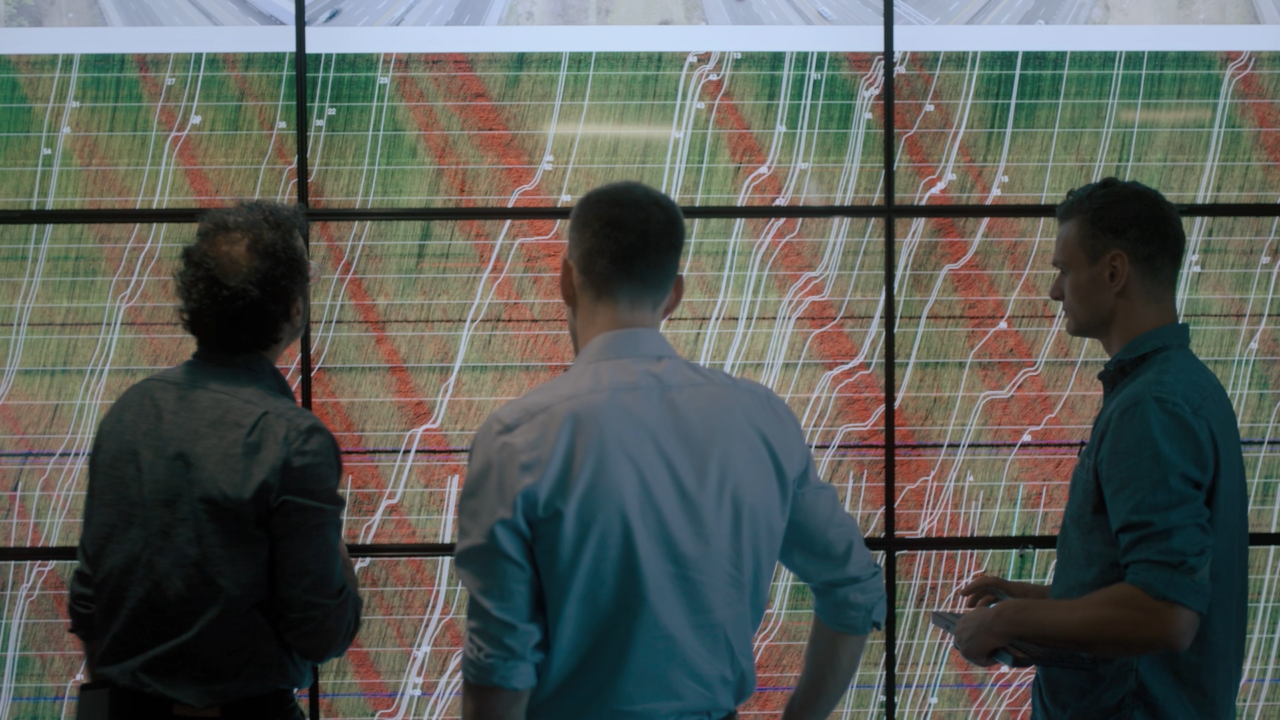
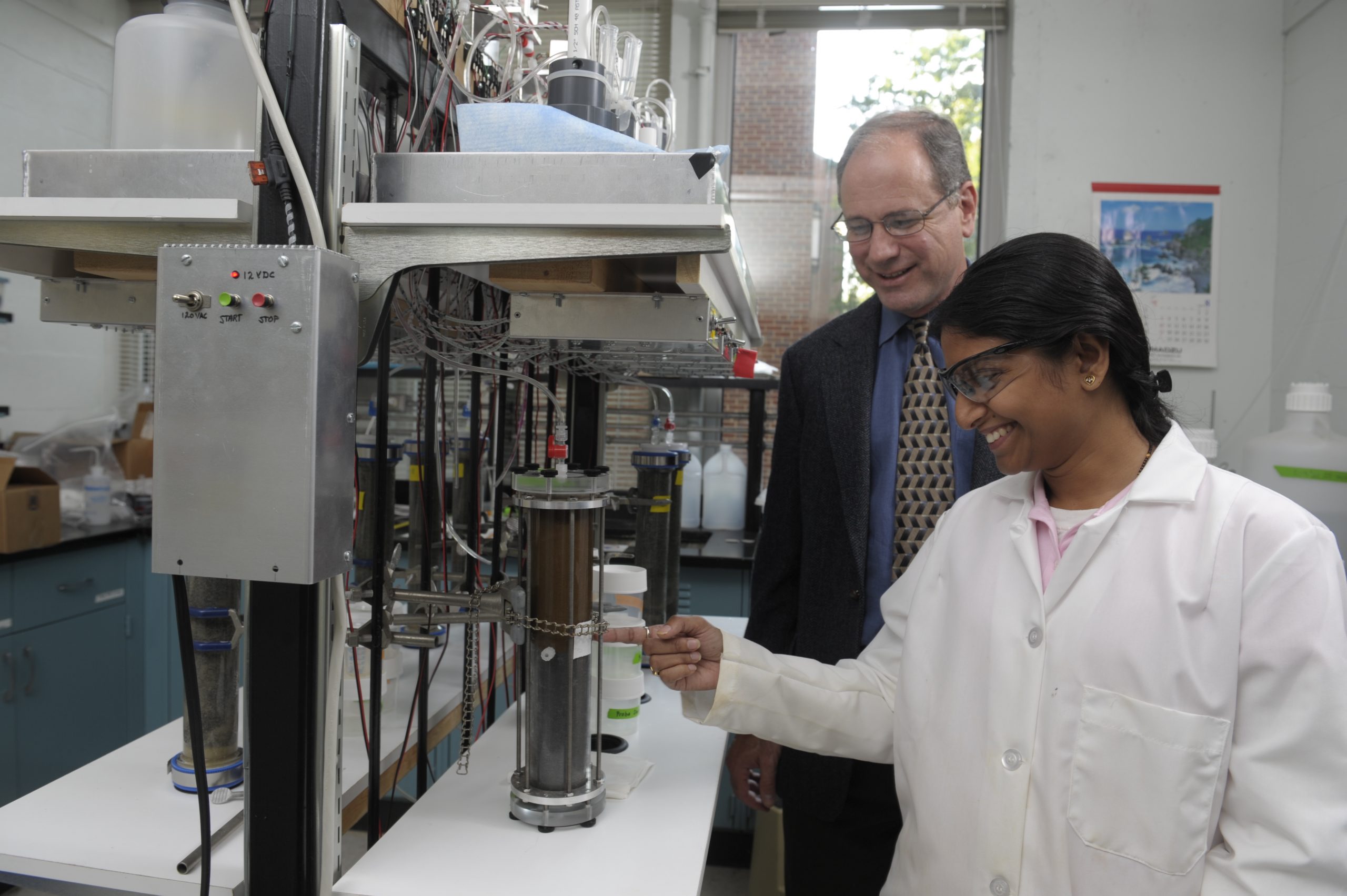 Our strengths in risk, reliability and resilience, cyber-physical systems, nanoscale sciences and engineering, and computational engineering allow us to perform high-impact, multidisciplinary research to answer engineering's most important questions.